


How 360° Shuttle Advertising Is Evolving in Delhi NCR
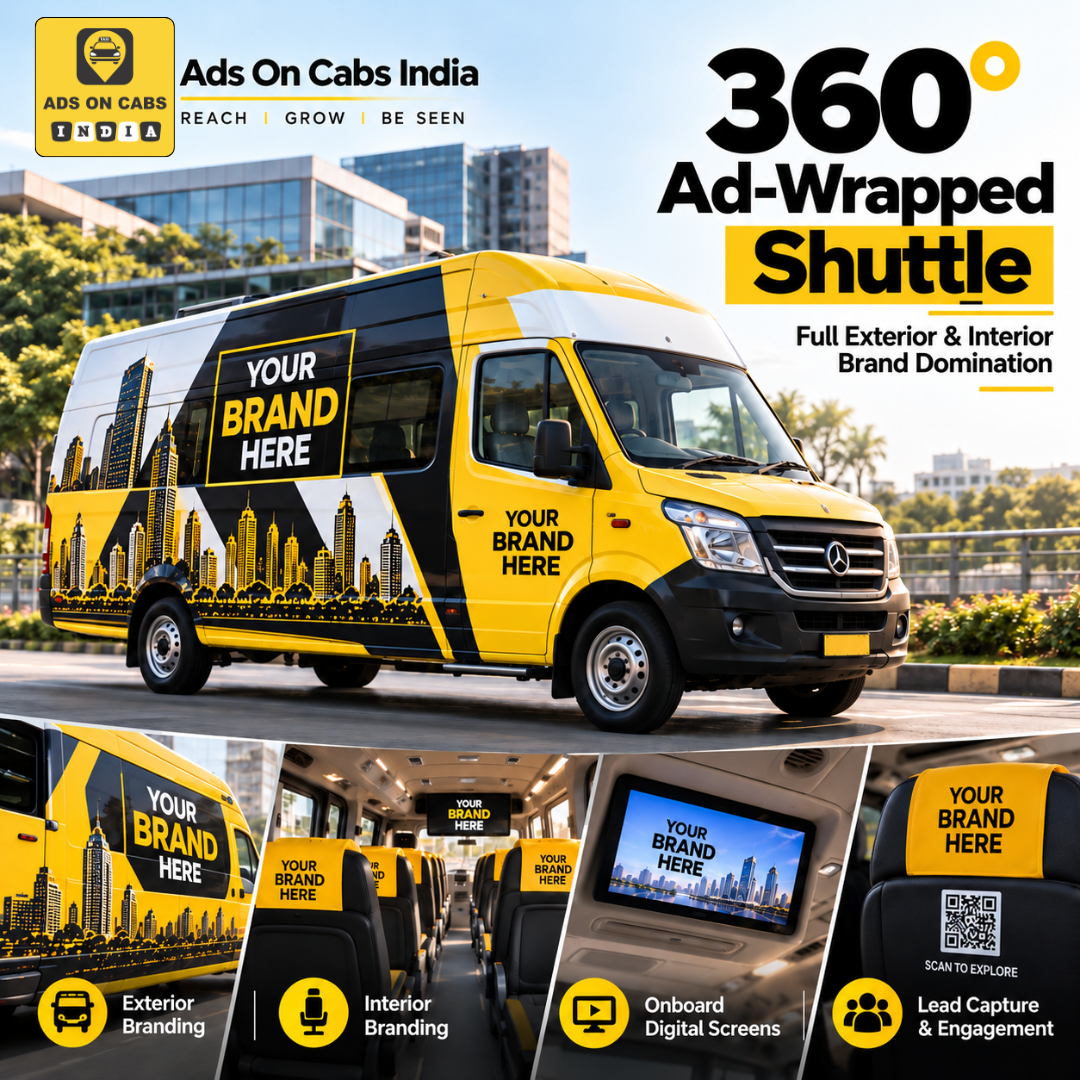
The outdoor advertising industry continues to explore ways of connecting traditional brand visibility with digital customer engagement. One approach attracting attention is the concept of 360-degree shuttle advertising, where passenger vehicles become platforms for multiple promotional experiences.
Across commercial markets such as Delhi, Noida and Gurugram, businesses can explore shuttle branding as an alternative or complementary channel to conventional outdoor advertising.
Rather than relying exclusively on large exterior advertisements, the concept combines vehicle graphics, interior promotional spaces, onboard digital content and interactive technologies.
From exterior visibility to passenger engagement
Vehicle advertising has traditionally focused on exterior visibility. A branded vehicle moving through a busy area can display a company’s logo, product or promotional message to surrounding audiences.
The 360-degree approach extends this idea.
Passengers inside the vehicle may encounter promotional messages on headrests, seat-back panels or digital screens. QR codes can then provide a pathway to additional information through a smartphone.
These advertising elements allow marketers to design a sequence of interactions rather than relying on one promotional display.
Four connected advertising formats
Exterior wraps and vehicle graphics provide visual exposure along the shuttle’s operating route.
Advertisers typically benefit from simple designs, recognizable branding and concise messages that can be understood quickly.
Interior placements create opportunities for more detailed communication with passengers.
Depending on the available advertising format, brands may promote product features, special offers or services through seat-back panels and other interior spaces.
Onboard screens can display promotional videos, product demonstrations and brand messages.
Since passengers may not always be able to hear the audio, advertisements should communicate their essential message through visuals and readable text.
QR codes can direct passengers to campaign websites, registration forms, promotional pages or other digital destinations.
Tracking links may help advertisers understand which placements generate online visits.
However, website traffic and QR-code scans should not automatically be interpreted as confirmed sales.
Planning for Delhi NCR audiences
Delhi NCR contains a diverse mix of residential communities, commercial centres, educational institutions and corporate offices.
These different audience groups create opportunities for geographically targeted advertising campaigns.
In Dwarka, brands may focus on campaigns relevant to residential and local commercial audiences.
In Noida, campaigns can be designed around the intended mix of office professionals, shoppers and residents.
In Gurugram, advertisers may prioritize corporate audiences, retail destinations or residential communities.
Campaign planning must account for actual shuttle routes, vehicle availability, operating schedules and applicable branding permissions.
Measuring campaign outcomes
One important development in outdoor advertising is the growing emphasis on campaign accountability.
For shuttle advertising, advertisers can explore several measurement methods, including route documentation, campaign photographs, QR-code tracking and website analytics.
Where available, GPS-based route reports can provide additional information about vehicle movement.
These indicators serve different purposes. A vehicle’s movement, a passenger’s exposure to an advertisement and a website enquiry are not equivalent measurements.
Businesses should therefore establish reporting requirements before launching a campaign.
The Ads On Cabs shuttle advertising concept
Ads On Cabs India has outlined a shuttle advertising concept that brings together exterior vehicle branding, passenger-facing placements, digital screens and QR-led engagement.
Its published guide also discusses campaign planning for Dwarka, Noida and Gurugram, along with possible reporting methods and connected customer touchpoints.
Read the detailed industry guide: 360° Shuttle Advertising in Delhi NCR, Dwarka, Noida & Gurugram — Ads On Cabs India.
The concept illustrates how transit advertising can be designed to support both brand exposure and digital interaction.
Connecting offline visibility with online action
As marketing channels become increasingly interconnected, advertisers are exploring opportunities to link offline visibility with measurable online actions.
Shuttle advertising is one example of this approach.
Its potential value lies not simply in placing advertisements on vehicles, but in selecting relevant audiences, coordinating multiple advertising formats and evaluating campaign outcomes.
For businesses exploring outdoor advertising in Delhi NCR, the 360-degree shuttle model offers another format to consider within a wider marketing strategy.
