
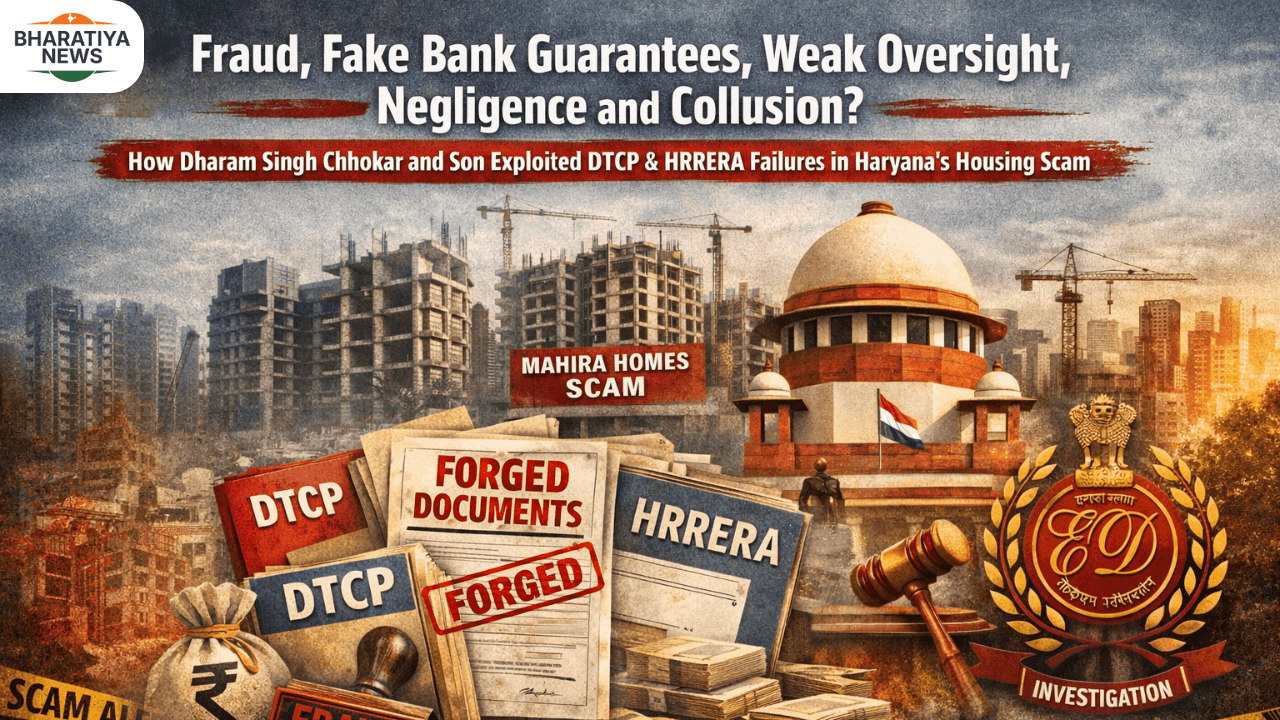
Fraud, Fake Bank Guarantees, Weak Oversight, and Negligence in Mahira Homes 63A, 68, 95, 103, 104 ? : How Dharam Singh Chhokar and Son Exploited DTCP & HRRERA Failures in Haryana’s Housing Scam that Shattered Dreams of Middle Class Affordable Scheme Buyer
Gurugram | Bharatiya News
Serious questions have been raised over regulatory oversight in Haryana’s real estate sector after the Department of Town and Country Planning (DTCP) cancelled licences of several affordable housing projects linked to Mahira Homes. The decision followed allegations that forged bank guarantees and incorrect documents were submitted to secure project approvals.
Along with licence cancellations, DTCP has blacklisted Mahira Homes and Czar Buildwell. This action restricts the companies, their directors, and authorised representatives from seeking fresh project approvals in the state. The affected developments include affordable housing projects in Sectors 68 and 104. Another project in Sector 63A, initially approved in the name of Czar Buildwell and later transferred to Mahira Homes, is currently under detailed investigation.
Officials have also noted that licences were allegedly obtained under different company names, with frequent changes in directors and authorised signatories, raising further concerns about transparency and compliance.
Alleged Forgery and Oversight Gaps
According to official findings, the developers are suspected of violating provisions of the Haryana Urban Development Act by submitting invalid financial guarantees and falsified documents during the licensing process. These projects were later marketed as government-approved affordable housing schemes under the Pradhan Mantri Awas Yojana (PMAY).
The developments have triggered questions about how approvals were granted despite such irregularities. Attention has also turned towards the roles of DTCP, Haryana Real Estate Regulatory Authority (HRRERA), and the banks responsible for verifying mandatory financial documents.
Once discrepancies surfaced, HRRERA reportedly froze the developers’ bank accounts, directed the registration of FIRs related to document forgery, and eventually cancelled project registrations. Sales and marketing activities were stopped, but for many buyers, these steps came after significant financial commitments had already been made. Investigations by the Anti-Corruption Bureau (ACB), Gurugram, are still ongoing and seems never ending.
Thousands of Homebuyers Affected
More than 5,000 middle-class families are said to be impacted by the stalled projects. Reports suggest that in some developments, nearly two-thirds of buyers had already paid a substantial portion of their flat cost, while construction has remained halted since 2022.
Many buyers continue to pay home loan EMIs without receiving possession, leading to repeated protests outside DTCP offices and increasing public frustration.
Supreme Court and Enforcement Directorate Action
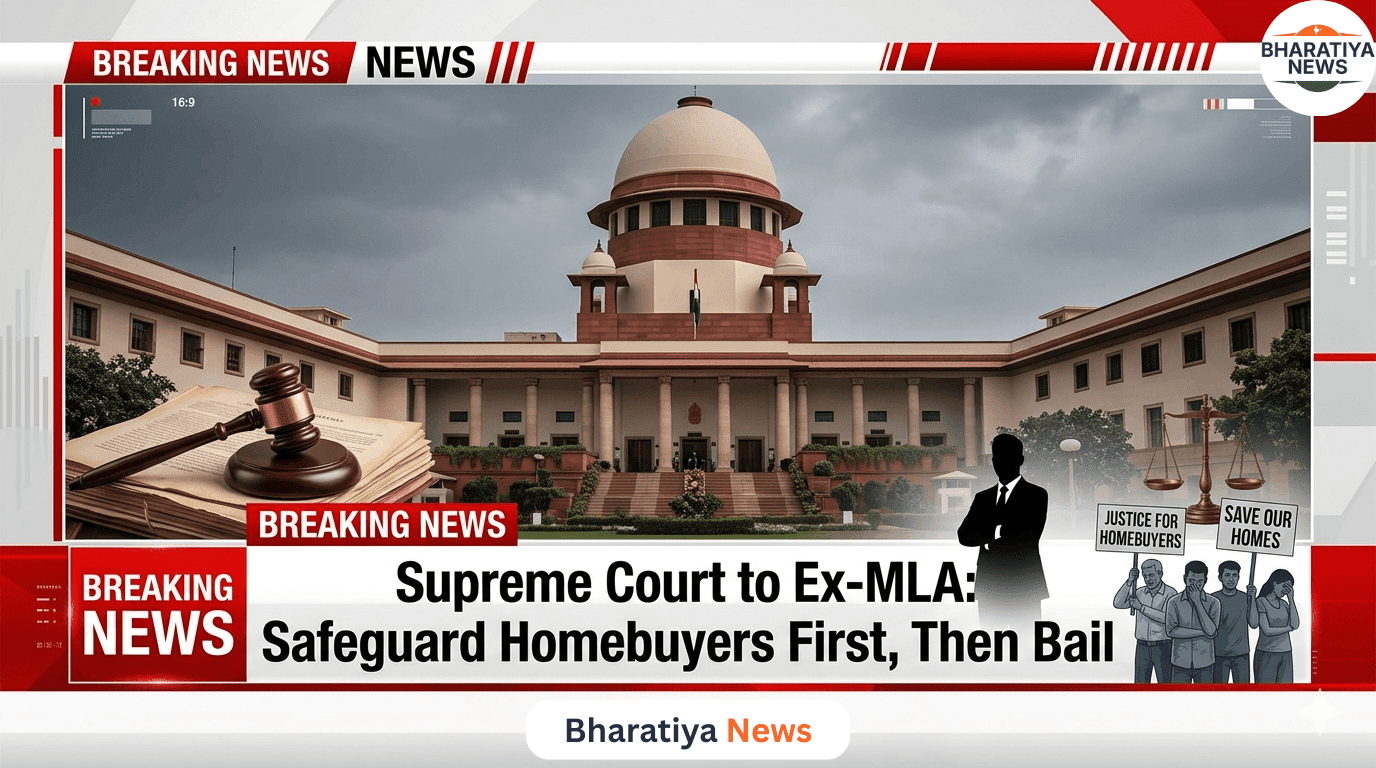
The matter has reached the Supreme Court, which took note of petitions filed by homebuyer associations in 2025. During hearings, the court reportedly expressed dissatisfaction with the functioning of regulatory authorities and ordered further examination into possible links between builders, financial institutions, and regulators.
The apex court also directed the Haryana government to submit details of affordable housing licences issued over the past decade.
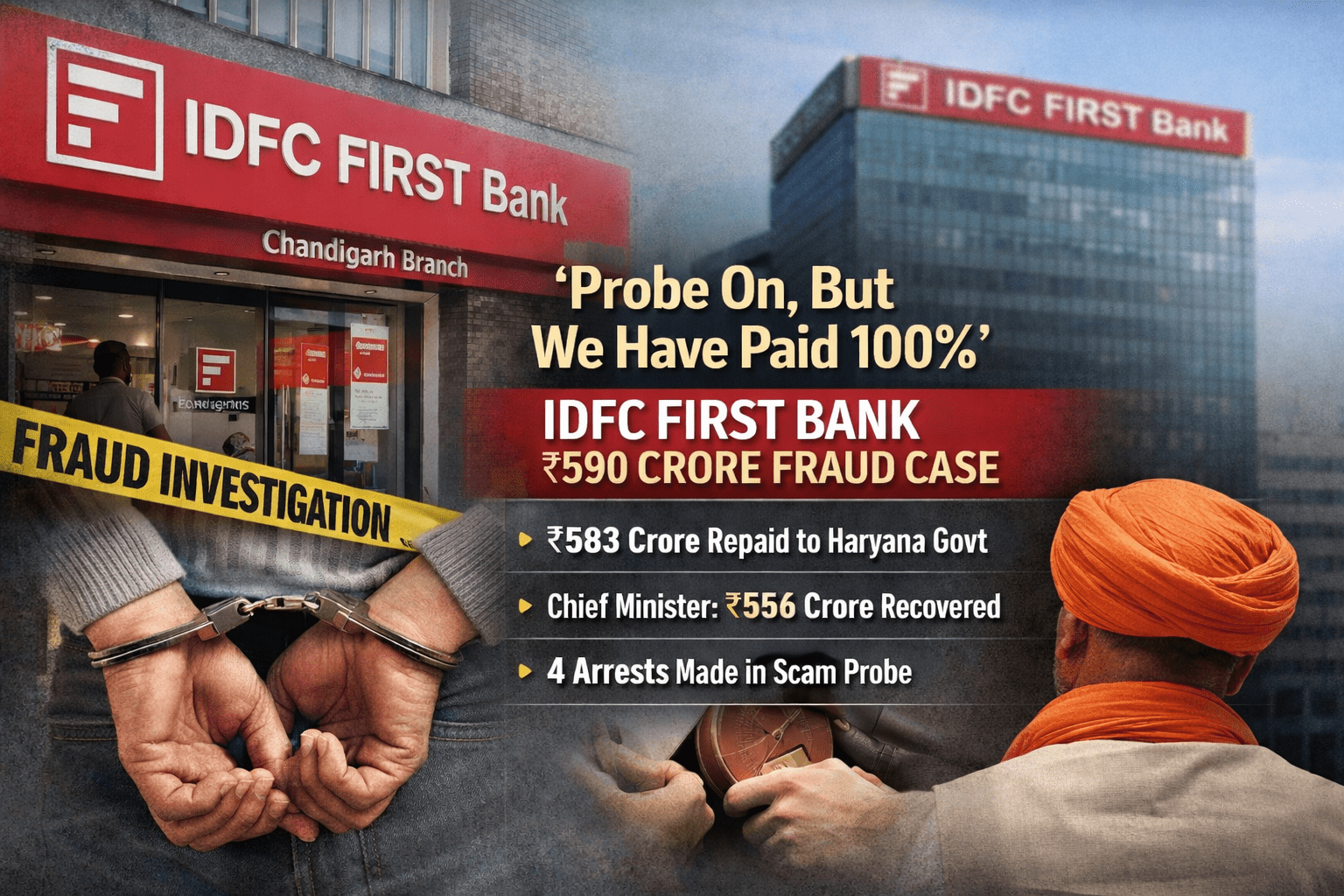
Separately, the Enforcement Directorate (ED) has attached assets worth over ₹550 crore linked to the Mahira Group as part of a money-laundering investigation. Several directors and family members, including Sikandar Singh Chhokar, were arrested during the probe, though some later received bail. However, buyers have pointed out that no ECIR has reportedly been filed by ED in connection with the Sector 63A project.
Questions Surrounding Regulatory Accountability
The case has reopened debate on the effectiveness of regulatory bodies meant to safeguard homebuyers. Key questions being raised include:
- How licences and project registrations were approved without proper verification of bank guarantees
- Whether officials failed in due diligence or if there was deliberate collusion
- Why disciplinary or criminal action against responsible officials has not been clearly disclosed
- How buyers were allowed to invest under the PMAY banner despite compliance concerns
- Why regulators reportedly lack complete financial data for certain projects
- On what basis audits were conducted when buyers allege discrepancies
- Whether accountability will extend beyond builders to regulatory authorities
Hope Hinges on Supreme Court Proceedings
As the Supreme Court continues to hear the case, thousands of affected families await clarity and relief. Buyers are firm to raise their project under the rule of affordable housing policy and ready to take up construction of their dream homes.
The case has emerged as a strong example of how fake bank guarantees, forged financial documents, weak verification systems, and regulatory lapses can combine to trap thousands of citizens in a housing scam, raising urgent questions about systemic accountability in Haryana’s real estate governance.. Observers say the outcome could play a key role in restoring confidence in India’s housing oversight mechanisms and ensuring greater accountability in the real estate sector.