
NEET PG 2025 Cut-Off Lowered to Zero to Fill Vacant Seats, Triggers Debate on Medical Standards
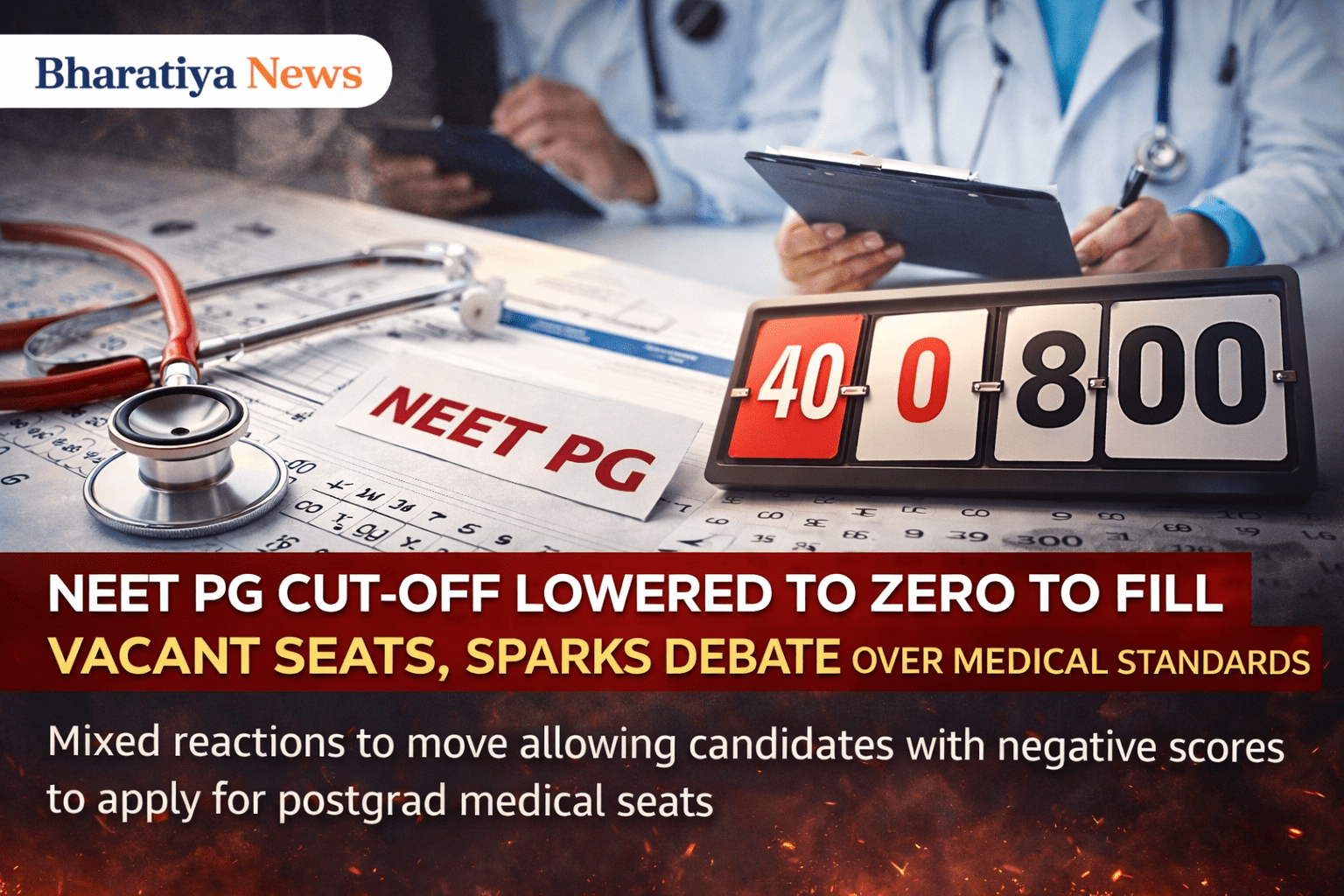
The National Board of Examinations in Medical Sciences (NBEMS) has reduced the qualifying percentile for reserved category candidates in NEET-PG 2025 to zero, allowing even candidates with negative scores to participate in the third round of counselling for postgraduate medical seats. The decision has reignited a debate within the medical community over balancing seat utilisation with maintaining academic and clinical standards.
The move comes after Round-2 counselling concluded with more than 18,000 postgraduate medical seats remaining vacant across government and private medical colleges. Health Ministry sources said leaving such a large number of seats unfilled would undermine national healthcare goals and lead to wastage of existing educational infrastructure.
“All NEET-PG candidates are MBBS-qualified doctors who have completed their internships. NEET-PG serves as a ranking mechanism to ensure transparent and merit-based allocation of seats,” Health Ministry officials stated. They emphasised that admissions will continue strictly through centralised counselling, based on rank and candidate preferences, with no scope for direct or discretionary admissions.
Officials further clarified that lowering the cut-off does not dilute academic standards but merely expands the pool of eligible candidates among already-qualified doctors. Similar measures, they noted, have been adopted in previous years to prevent seat wastage and address shortages of resident doctors.
Doctors’ Groups Divided
The decision followed a letter from the Indian Medical Association (IMA) to Union Health Minister J.P. Nadda on January 12, urging a reduction in the cut-off. The IMA argued that high eligibility thresholds were excluding otherwise capable candidates, resulting in staff shortages, increased workload on existing residents, and potential strain on patient care, particularly in government hospitals.
However, the move has faced strong opposition from organisations such as the Federation of All India Medical Associations (FAIMA). FAIMA representatives warned that reducing the qualifying percentile to zero could set a troubling precedent.
Dr Rohan Krishnan, a FAIMA member, expressed concern that candidates with significantly low or negative scores would now be eligible for postgraduate training. “This repeated lowering of cut-offs over the past five years reflects a trend driven by the need to fill seats, especially in private medical colleges,” he said, cautioning that such colleges often lack adequate faculty, infrastructure, and clinical exposure.
He further warned that the dilution of eligibility norms could impact the quality of doctors entering critical specialties such as medicine and paediatrics, ultimately affecting patient care.
Government Rejects Commercialisation Claims
Health Ministry sources have rejected allegations that the decision promotes commercial interests, stressing that transparency, inter-se merit, and choice-based seat allocation remain at the core of the counselling process. They reiterated that the policy aims to optimise available resources while continuing to follow a structured and regulated admission framework.
As counselling progresses, the decision continues to draw mixed reactions, highlighting the ongoing challenge of balancing healthcare workforce needs with maintaining rigorous medical education standards.
(Except for the headline, this story has not been edited by Bharatiya News staff and is published from a syndicated feed.)