
Tarique Rahman Set to Lead Bangladesh After Landslide Victory, Returning From 17-Year Exile
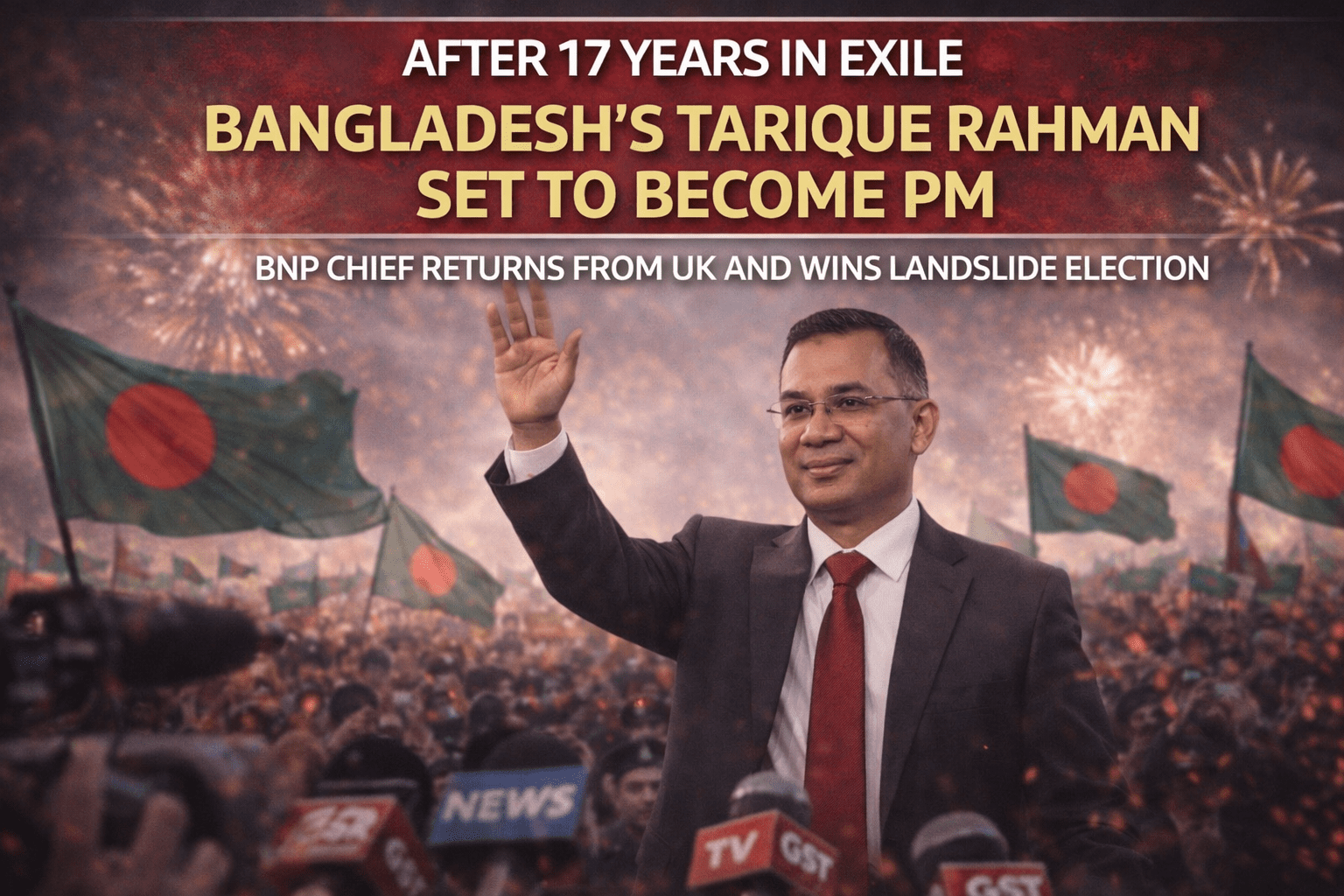
In a dramatic political comeback, Tarique Rahman is poised to become the next Prime Minister of Bangladesh, marking a historic return to power after spending 17 years in exile in the United Kingdom.
Rahman’s party, the Bangladesh Nationalist Party (BNP), surged ahead in the national elections, securing what party leaders describe as a decisive mandate. According to unofficial Election Commission figures, Rahman won parliamentary seats from Dhaka-17 and Bogura-6, reinforcing his leadership at a pivotal moment in the country’s politics.
Local media, including The Daily Star, reported that the BNP contested 292 out of 300 seats, leaving only a handful for allied smaller parties, and is on course to secure a two-thirds parliamentary majority.
International Reactions Pour In
Indian Prime Minister Narendra Modi congratulated Rahman on the victory, emphasizing New Delhi’s commitment to continued cooperation.
India, he said, looks forward to working with the new leadership to strengthen bilateral ties and advance shared development goals. The statement signals an attempt to stabilize relations between India and Bangladesh, which have faced strains in recent years.
The United States also welcomed the election outcome. US Ambassador Brent T. Christensen described the result as a “historic victory” and expressed hope for enhanced cooperation in areas of prosperity and regional security.
A Political Comeback Decades in the Making
Rahman, 60, is the eldest son of former Bangladeshi President Ziaur Rahman and former Prime Minister Khaleda Zia, making him part of one of the country’s most influential political dynasties.
He assumed formal leadership of the BNP in December 2025 following his mother’s death, after serving for years as the party’s acting chairman. His return from exile in London reshaped Bangladesh’s political landscape, especially after the Awami League—long led by Sheikh Hasina—was unable to contest the election due to suspension of its registration.
Turbulent Past: Arrest, Exile, and Legal Battles
Rahman’s political journey has been marked by controversy and upheaval. He was arrested in May 2007 by a military-backed caretaker government and spent 17 months in detention on multiple charges, including corruption and alleged involvement in an assassination plot. Convictions handed down in absentia were later overturned following political changes in 2024.
The 2006–2008 period saw widespread unrest between the BNP and rival groups, ultimately leading to emergency rule and a reshaped electoral process that brought the Awami League to power in 2008.
Electoral Contest and Opposition Landscape
The BNP entered this election as the clear front-runner, facing an alliance of 11 parties led by Jamaat-e-Islami. BNP leaders claim the results reflect a sweeping public mandate and have urged supporters to offer prayers rather than stage celebratory street rallies.
A New Chapter — and Diplomatic Challenges Ahead
One of the most immediate challenges for Rahman’s incoming government will be recalibrating Bangladesh’s foreign relations, particularly with India. Under Sheikh Hasina, bilateral ties were considered exceptionally close, but relations deteriorated sharply after her government’s fall.
Rahman has indicated willingness to rebuild engagement, stating that future cooperation must be based on “mutual respect and understanding,” suggesting a potential reset in regional diplomacy.
What Lies Ahead
Rahman’s return signals a major shift in Bangladesh’s political direction, ending nearly two decades of his absence from domestic politics and potentially ushering in a new era of governance.
As the BNP prepares to formally assume power, analysts say the new administration will face immediate tests: stabilizing democratic institutions, addressing economic pressures, and redefining Bangladesh’s role in South Asian geopolitics.
The coming months will determine whether Tarique Rahman’s long-awaited comeback translates into lasting political stability—or opens another chapter in the nation’s intensely competitive political history.